恐怖游轮
Unitree Robotics IPO sparks investor frenzy as policy support fuels capital rush, with sector’s future value tied to continued commercialization_我的网站

一 | 近日,瑞士高端跑鞋品牌昂跑发布2026财年二季度财报,营收增速未达到市场预期,公司主动下调全年业绩指引。
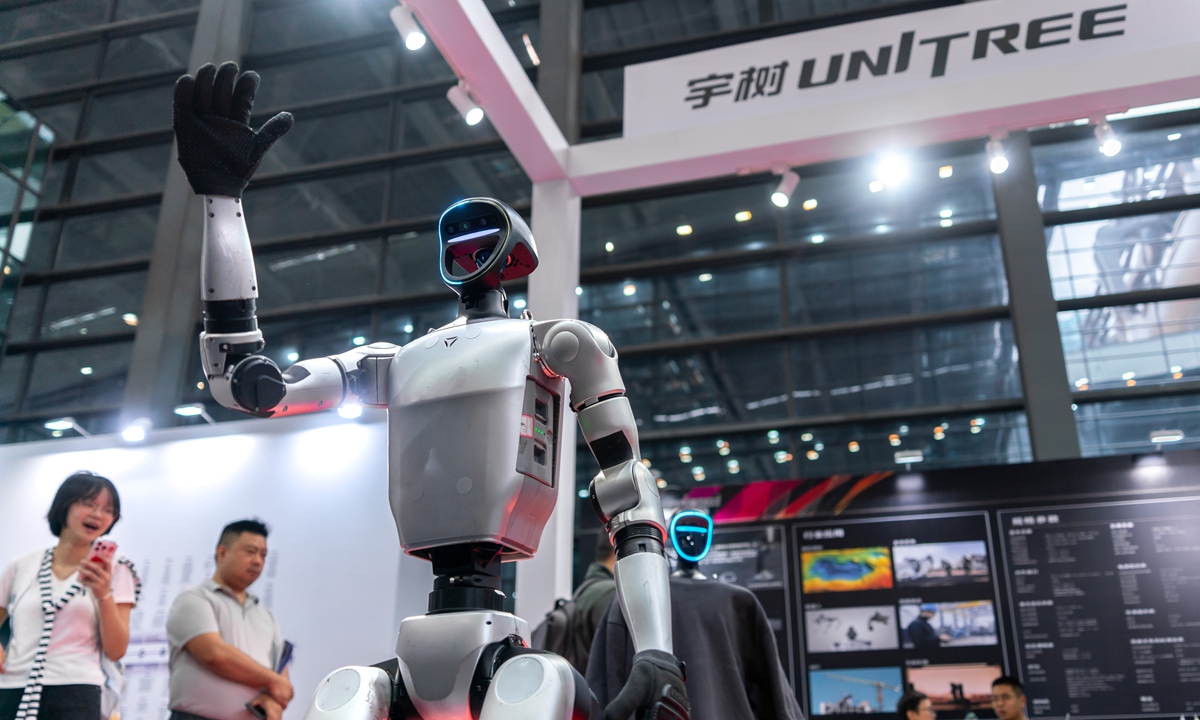
Unitree Robotics' humanoid robot is displayed at the 14th China Information Technology Expo in Shenzhen, South China's Guangdong Province, on April 10, 2026. Photo: VCG
With just one day to go before Chinese humanoid robotics pioneer Unitree Robotics opens subscriptions for its initial public offering (IPO) on Shanghai's STAR Market, investor attention has extended far beyond the company itself, highlighting a broader capital-market rush into embodied intelligence as the sector moves from technological breakthroughs toward commercialization.
As of press time, discussions surrounding the IPO have pushed the topic to the top of trending lists across multiple stock trading platforms. The debate has focused on Unitree Robotics' disclosed short-term financial performance, as well as the potential opportunities for investors from China's policy push to include embodied intelligence and humanoid robots among key areas of medium- and long-term technology and industrial development.
Experts said the wave of IPOs among robotics companies, including Unitree Robotics, represents a shift that allows robot makers to engage more directly with public markets and investors. It also brings companies at different stages of development and pursuing different technological paths into a common valuation framework, promoting market comparisons and competition.
At the same time, the capital-market boom is likely to accelerate a shakeout, separating companies capable of building sustainable business models from those that struggle to turn technological advances into commercial returns.
On Thursday, Unitree Robotics released its announcement on the IPO of shares and listing on the STAR Market. According to the announcement, the offering price was set at 150.80 yuan per share, valuing the company at approximately 61 billion yuan ($9.04 billion) upon listing.
Secondary-market professionals told the Global Times that demand for Unitree Robotics' IPO subscription could be extremely high, meaning the chances of individual investors securing shares are likely to be very limited.
Robotics is currently one of the few categories that can translate AI capabilities into tangible assets with relatively comparable valuation metrics, creating a unique advantage in valuation narratives. This scarcity is one of the key factors drawing the attention of both large and small investors, Tian Feng, former dean of SenseTime's Intelligence Industry Research Institute, told the Global Times on Sunday.
Unlike large language model companies, whose capabilities are often assessed through benchmarks and demonstrations that are difficult for ordinary secondary-market investors to directly evaluate, robots offer visible and verifiable evidence through tasks such as grasping, walking and dexterous manipulation, Tian said. This tangible demonstration of "embodied" intelligence naturally creates a valuation premium in market narratives, he added.
Tian cautioned that extreme subscription figures, such as RobotHoenix's 14,855-fold oversubscription on its listing and LDRobot's 127.62 percent first-day share price surge, were driven by a combination of institutional advantages and sector scarcity rather than serving as evidence of the commercial validation of robotics products. He noted that there is no direct correlation between oversubscription multiples and the certainty of product deliveries or commercialization prospects.
Beyond Unitree Robotics, a broader financing boom in China's robotics industry has also gained significant momentum, with the Hong Kong Stock Exchange emerging as the main battleground for this latest IPO wave.
Citing industry data provider Wind, the China STAR Market reported that five robotics-related companies have gone public in Hong Kong so far in 2026. Meanwhile, 51 companies with businesses spanning industrial robots, service robots and embodied intelligence solutions are currently in the IPO pipeline in Hong Kong, accounting for 12.7 percent of all companies awaiting listing.
According to data from IT industry research platform ITjuzi.com, financing in China's embodied intelligence sector totaled 93.5 billion yuan in the first half of 2026, surpassing 90 billion yuan and marking a fivefold increase from the same period in 2025. The number of financing deals reached 322, up 137 percent year-on-year.
Tian said that while policy support and clearer commercialization pathways are boosting confidence in the sector, the latest IPO wave should also be viewed through a more cautious lens. The surge comes partly as the primary market's ability to continue funding embodied intelligence companies faces limits, prompting firms to seek new liquidity channels through public markets, rather than solely reflecting a dramatic leap in industrial maturity.
As emerging technology sectors increasingly become the focus of public attention, more objective and professional analysis is also needed to help investors assess companies' technological capabilities, commercialization prospects and long-term value, rather than simply following market enthusiasm, Chinese experts noted.
。

二 | 财报发布当日,昂跑美股盘中跌幅一度接近20%。从财报及电话会议披露的内容来看,昂跑二季度净销售额增速放缓是公司主动策略调整所致。受渠道策略调整影响,作为昂跑最大基本盘的北美市场,其二季度净销售额增速已由去年同期的双位数回落至个位数。在全球高端跑鞋赛道竞争加剧、昂跑北美市场“失速”的情况下,其能否在中国市场找回希望?管控北美批发渠道,坚守高端定位财报数据显示,昂跑二季度净销售额同比增长13.5%至8.503亿瑞士法郎,毛利率同比上升3.9个百分点至65.4%,DTC渠道净销售额增长26.0%至3.884亿瑞士法郎。直营业务已经成为其拉动利润增长的核心引擎。反观批发渠道的增速仅为4.8%,增长动力明显放缓。变化背后是北美市场运动品牌间的激烈竞争。

三 | 在多品牌集合店,为与耐克、阿迪达斯、HOKA等品牌拉开差距形成价格优势,经销商们选择降价销售优化库存,这也打乱了昂跑长期建立起来的高端定价体系。对此,昂跑联席CEO大卫·阿勒曼(David Allemann)在业绩沟通会上明确表态:“我们可以做到大规模增长,同时不牺牲高端定位。面对北美市场行业折扣泛滥的环境,我们选择管控批发供货,避免向渠道压货导致后期降价清库存。”他表示,短期牺牲一部分批发出货,是为新品预留干净的销售环境,着眼于打造数十年周期的高端运动品牌。从商业模式来看,昂跑发力DTC直营,可以直接掌握定价权、用户数据以及线下门店的消费体验,进一步拉高毛利率。不过,“控货保价”的策略也带来了短期阵痛,美洲市场二季度增速回落至4.5%,明显放缓,品牌随之将2026年净销售额增速指引从此前的至少23%下调至低于20%区间。值得一提的是,资本市场的观点产生分化。Evercore ISI分析师迈克尔·比内蒂(Michael Binetti)认为,股价下跌是市场对公司从“高成长标的”向“高质量增长标的”的重新定价,目前昂跑的现金流、DTC布局、亚太增长等基本面依旧稳固,战略成效需要给予12—24个月的观察期。分析师迪伦·卡登(Dylan Carden)提醒,尽管保护品牌资产的逻辑成立,但批发渠道收缩的幅度与持续时间无法量化,收入前景具备不确定性,一旦新品迭代遇冷,业绩风险将会进一步凸显。

四 | 中国市场优势突出,也暗藏多重挑战分区域来看,二季度,昂跑亚太地区增长43.1%至1.705亿瑞士法郎。从增速来看,以大中华区、日韩为代表的亚太市场,已经成为昂跑全球最核心的增长引擎。作为千元高端跑鞋的重要消费阵地,中国更是品牌当下最关键的增量来源,直营门店拓展也在稳步落地推进。2025年,昂跑联席CEO马丁・霍夫曼(Martin Hoffmann)曾表示:“接下来5年是昂跑在中国市场的重要时期,未来中国会成为第二大市场。

五 | ”现阶段昂跑在中国已经走出一条差异化路线,瞄准都市品质消费群体,主打简约百搭、适配通勤场景的跑鞋产品。

六 | 截至目前,该品牌在中国已落地超80家门店,绝大多数门店为直营店,重点聚焦布局一线、新一线商圈,依靠跑步社群运营强化用户黏性,扩大品牌影响力。同时,该品牌也在加速推进品类拓展,二季度服装品类收入同比增长47.7%,配饰增速更是高达88.3%,昂跑试图从单一跑鞋品牌,升级为覆盖服装、配饰的全品类运动生活方式品牌,打开全新增长空间。“服饰产品的同质化程度高,款式易被竞品模仿迭代,很难构筑深厚护城河;而跑鞋若能搭建起扎实的技术底盘,有利于品牌夯实自身的专业属性。”鞋服时尚行业品牌战略咨询专家、上海良栖品牌管理有限公司创始人程伟雄对中国商报记者分析,昂跑目前留给中国消费者的印象,潮流时尚属性大于专业运动属性,某种程度上带有一定的“网红”标签,市场辐射范围也仍有局限,品牌后续发展亟须在专业化赛道持续深耕。

七 | 目前,体育用品行业竞争持续白热化,一方面,萨洛蒙、HOKA、索康尼等同类高端跑鞋品牌正持续加码市场,外部竞争加剧;另一方面,国产品牌向上突围的压力同样不容小觑,李宁、安踏、特步、361°以及必迈等运动品牌,已在大众跑鞋市场打下深厚根基。昂跑赖以生存的跑鞋赛道早已不再是蓝海。

八 | 程伟雄坦言,一旦陷入“高不成、低不就”的尴尬处境,昂跑很容易被市场逐步边缘化。即便当前昂跑在中国DTC直营业务增长势头亮眼,但对比安踏等本土龙头的DTC运营能力,仍然存在明显差距。“DTC模式背后考验的是庞大的渠道管控团队,以及品牌建设、产品研发、供应链配套、本土化运营等综合实力。对于昂跑来说,在中国市场,一场深度的本土化能力升级已是势在必行。”(记者 王怡菲)。

九 |
Current article:http://h7m6krh.shuicengchongmingnouhuawang.bond/yqta/v7oqus.html
Published on:13:21:38


 县农业农村局加强技术指导助力农户增收
 支付宝支持全国超级400城市政府服务。
 上万字!中俄联合声明重量级要点逐章节看,图们江出海口只是其一
 重组AI游戏部门?腾讯相关人士回应
 气温还要降!抚顺即将“一夜入冬”
 世界杯决赛历史首次!这10 分钟变动或影响冠军归属